
HPE Delivers Second Exascale Supercomputer, Aurora
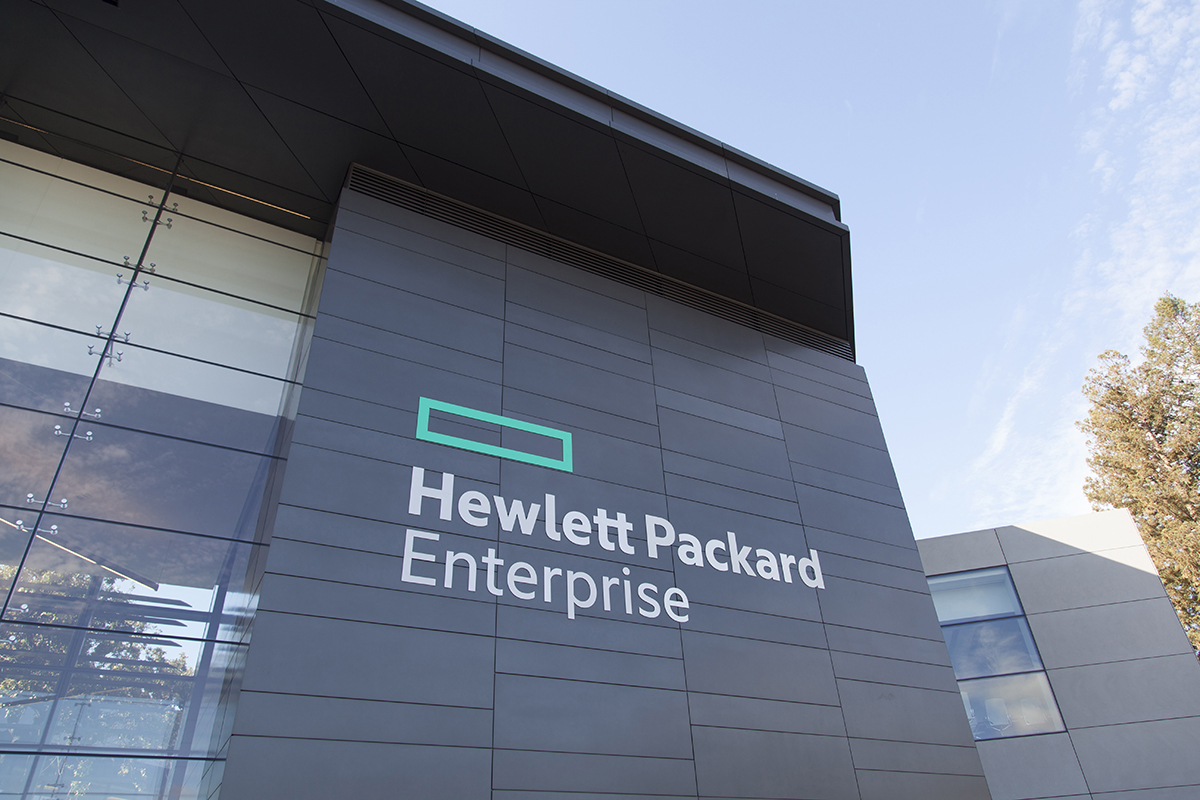
Hewlett Packard Enterprise has announced the delivery of the world’s second exascale supercomputer, Aurora, in collaboration with Intel for the United States Department of Energy’s Argonne National Laboratory.
Aurora has achieved 1.012 exaflops on 87% of the system, making it the world’s second-fastest supercomputer as verified by the TOP500 list of the most powerful supercomputers.
The supercomputer has topped the HPL Mixed Precision (MxP) Benchmark with 10.6 exaflops on 89% of the system.
Trish Damkroger, the senior vice president and general manager, HPC & AI Infrastructure Solutions at HPE said, “We are proud of the strong partnership with the U.S. Department of Energy, Argonne National Laboratory, and Intel to realise a system of this scale and magnitude.”
What this supercomputer does
An exascale computing system can process one quintillion operations per second, enabling solutions to some of humanity’s most complex problems. Aurora, built with the HPE Cray EX supercomputer, supports this scale with the largest deployment of HPE Slingshot, an Ethernet-based supercomputing interconnect.
This fabric connects Aurora’s 75,000 compute node endpoints, 2,400 storage and service network endpoints, and 5,600 switches, improving performance across Aurora’s 10,624 compute blades, 21,248 Intel Xeon CPU Max Series processors, and 63,744 Intel Data Center GPU Max units, making it one of the world’s largest GPU clusters.
Planned as an AI-capable system from inception, researchers can use generative AI models on Aurora to accelerate scientific discovery. Early AI-driven research on Aurora includes brain mapping, high energy particle physics, and machine-learning accelerated drug design and discovery.
Aurora, housed at the Argonne Leadership Computing Facility (ALCF), a part of the U.S. Department of Energy’s Office of Science user facility, is the product of a strong private-public partnership between HPE, Intel, the U.S. Department of Energy, and Argonne National Laboratory.
The supercomputer has reached exascale on a partial run, utilising 9,234 of the total nodes. It is an open science system housed at the Argonne Leadership Computing Facility, aiming to support groundbreaking scientific research.
In contrast, Recursion’s BioHive-2, powered by NVIDIA GPUs, was released yesterday and achieves two exaflops of AI performance, marking it as one of the top 35 supercomputers globally.
Unlike Aurora, which focuses broadly on scientific research, BioHive-2 is tailored for pharmaceutical research and development.
The post HPE Delivers Second Exascale Supercomputer, Aurora appeared first on Analytics India Magazine.