

How This Bengaluru-based AI Startup is Helping Reduce Carbon Footprint
As AI becomes increasingly pervasive in various applications across industries, many experts, including Jesse Dodge, a research scientist at the Allen Institute for AI, have raised concerns about its growing environmental impact.
The training and running of these AI systems, driven by the substantial computing power and electricity they require, contributes to their carbon footprint. However, experts emphasise that the broader environmental impact of AI extends beyond its direct emissions.
Dodge also pointed out a lack of transparency from many AI companies, adding further complexity to understanding their models’ overall environmental impact, especially when analysed solely from an emissions perspective.
Not all is lost, though. Bengaluru-based Sentra World aims to capitalise on the very same technology to fight the prevailing issue. The company’s analytics platform uses natural language processing to simplify the measurement of CO₂ emissions, adhering to established frameworks like the greenhouse gas protocol.
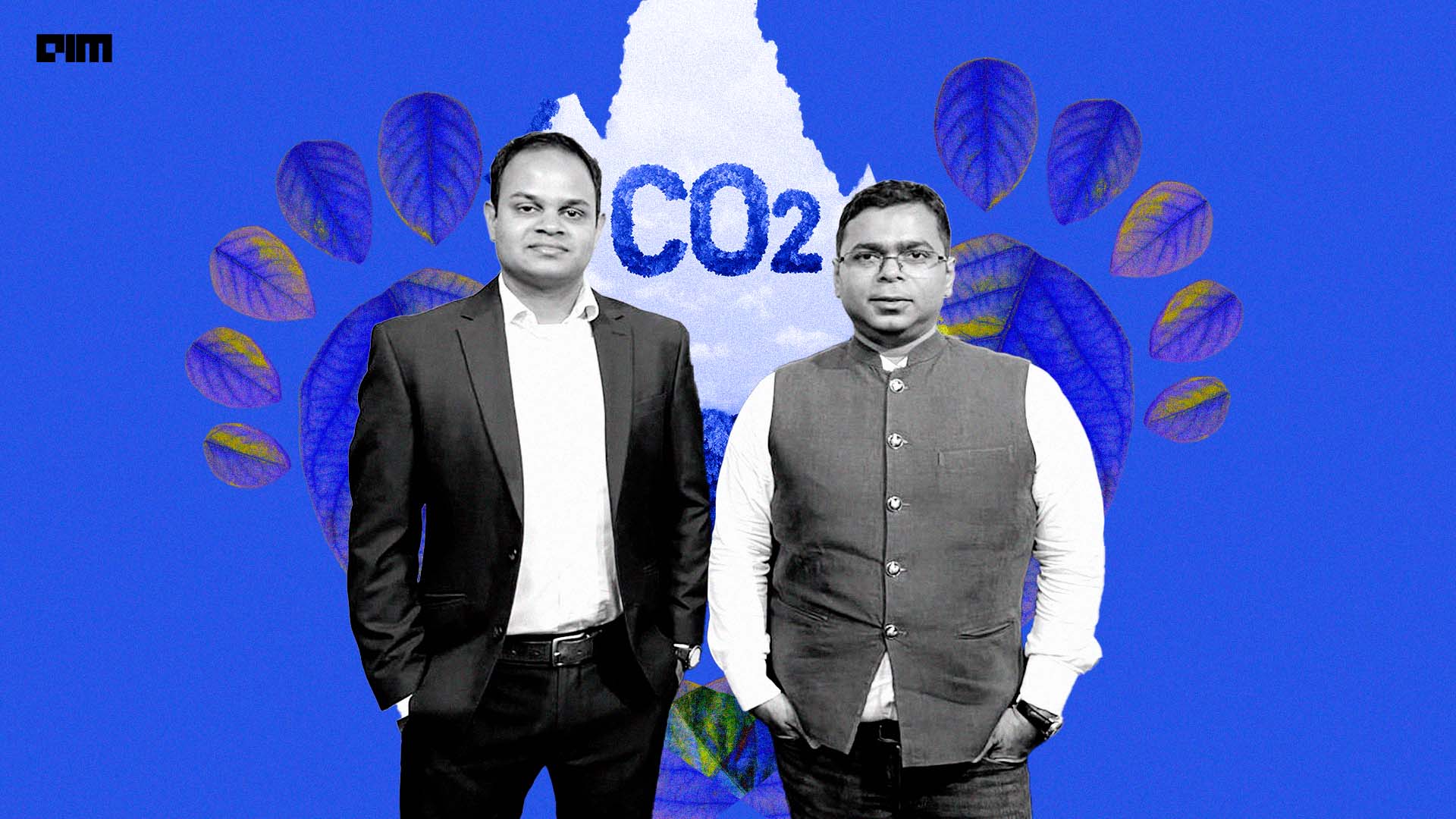
“Our objective at Sentra World is to decarbonise industrial manufacturing. To ensure global temperature increase doesn’t surpass 1.5°C, we aim to reduce emissions in this sector by at least 50%,” explained CEO and co-founder Harsh Choudhry.
Choudhry, a seasoned professional with nearly 17 years dedicated to sustainability and climate change, started the conversation by emphasising the urgency of addressing climate change. He highlighted that 60% of greenhouse gas emissions stem from industrial manufacturing, making it a critical sector for decarbonisation.
Their flagship product, Calculus, provides detailed emissions calculations across various scopes, utilising sector-specific tools for accurate measurement and reporting. Sentra.Network, another key offering, uses blockchain technology to trace carbon emissions along supply chains, offering a green rating to suppliers and enhancing data trust.
The Tech Stack
“Calculus is our brain, where all emission calculations occur. We’ve mapped specific industrial processes, offering a granular understanding of emissions.
Additionally, we assist companies in getting certified on emission levels and connecting with suppliers to address the full scope of emissions,” said Vikas Upadhyay, the company’s CTO, shedding light on Calculus.
When quizzed about the technical aspects of SentraWorld’s platform, Upadhyay detailed the use of AI in data transformation and validation. “In our first product, Calculus, AI plays a pivotal role as it helps transform diverse data from sources like IoT devices, SAP, ERP systems, Excel files, PDFs, and screenshots into our format,” he explained.
The AI-driven transformation involves natural language processing and matching to ensure compatibility with their tech stack, emphasising the role of AI during data ingestion.
Upadhyay highlighted the importance of trust in reported numbers: “The biggest challenge in this industry is data trust and authenticity. Greenwashing is prevalent, and we address this using AI and blockchain.”
This involves scrutinising numbers and using blockchain to trace emissions along the supply chain, enhancing data authenticity and trust, a feature embedded in their product called Network.
The representative further elaborates on the application of AI in their upcoming product, Reduce, stating, “We’re building a database of projects for carbon reduction, simulating the best solutions for customers based on cost and targets.”
The focus on transparency and certification continues with the mention of blockchain applications and generative AI for report writing, offering customers efficiency and accuracy.
The company was announced as a part of Google’s accelerator programme in 2023 and employs their expertise in blockchain and AI-related technologies like NLP and OCR.
Climate Regulation Enabling Bottom Line
Founded in early 2023 by former McKinsey partners and with a lean team of 30 members, Sentra collaborates with ten industrial giants in India and the Middle East, featuring prominent partners such as Emirates Steel, Jindal Shadeed, Kalyani Steel, and Starwire.
Furthermore, they are engaged in discussions with renowned entities like Volvo and Mahindra on similar topics.
While they compete with big techs like Microsoft and IBM, and others like Sphera, Enableon, and Indian startups like StepChange and Uptap, the distinction they believe lies in their sector-specific vertical approach and a focus on creating business value.
“Everything we do helps companies, not just lower emissions, but create business value,” said Choudhry. The executives articulated a strategic vision to address climate challenges in large enterprises, presenting a three-fold approach.
“See, there are three ways to create value from this, i.e. growing your top line, bottom line and financing,” Choudhry emphasised. They began by discussing top-line growth, acknowledging the impact of climate regulations, such as CBAM, on India’s metal exports to the EU. The leaders proposed leveraging their platform, stating, “Through our platform, it doesn’t become a hindrance, but it becomes a competitive advantage.”
Continuing the conversation, the executives explored strategies for enhancing the bottom line. They highlighted the automotive sector’s inclination towards low CO₂ footprint products, stating, “The automotive sector is a big absorber of anything that has a low CO₂ footprint.”
Early insights indicated potential premiums of up to 20%, showcasing a market demand for transparency in sustainability. In the context of financing, the leaders underscored the need for massive investments in sectors like steel and cement to meet India’s infrastructure growth.
They pointed out the impact of sustainability goals on debt financing: “The moment you add a sustainability or decarbonisation target to it, you can get a discount of somewhere between 25 to 50 basis points on that interest rate,” said Choudhry highlighting real-world cases of successful reductions in interest rates, including UPL’s $700 million deal in 2021 and JSW’s $500 million deal in 2022.
The post How This Bengaluru-based AI Startup is Helping Reduce Carbon Footprint appeared first on Analytics India Magazine.

