
Why Sam’s Return to OpenAI is Good For Microsoft
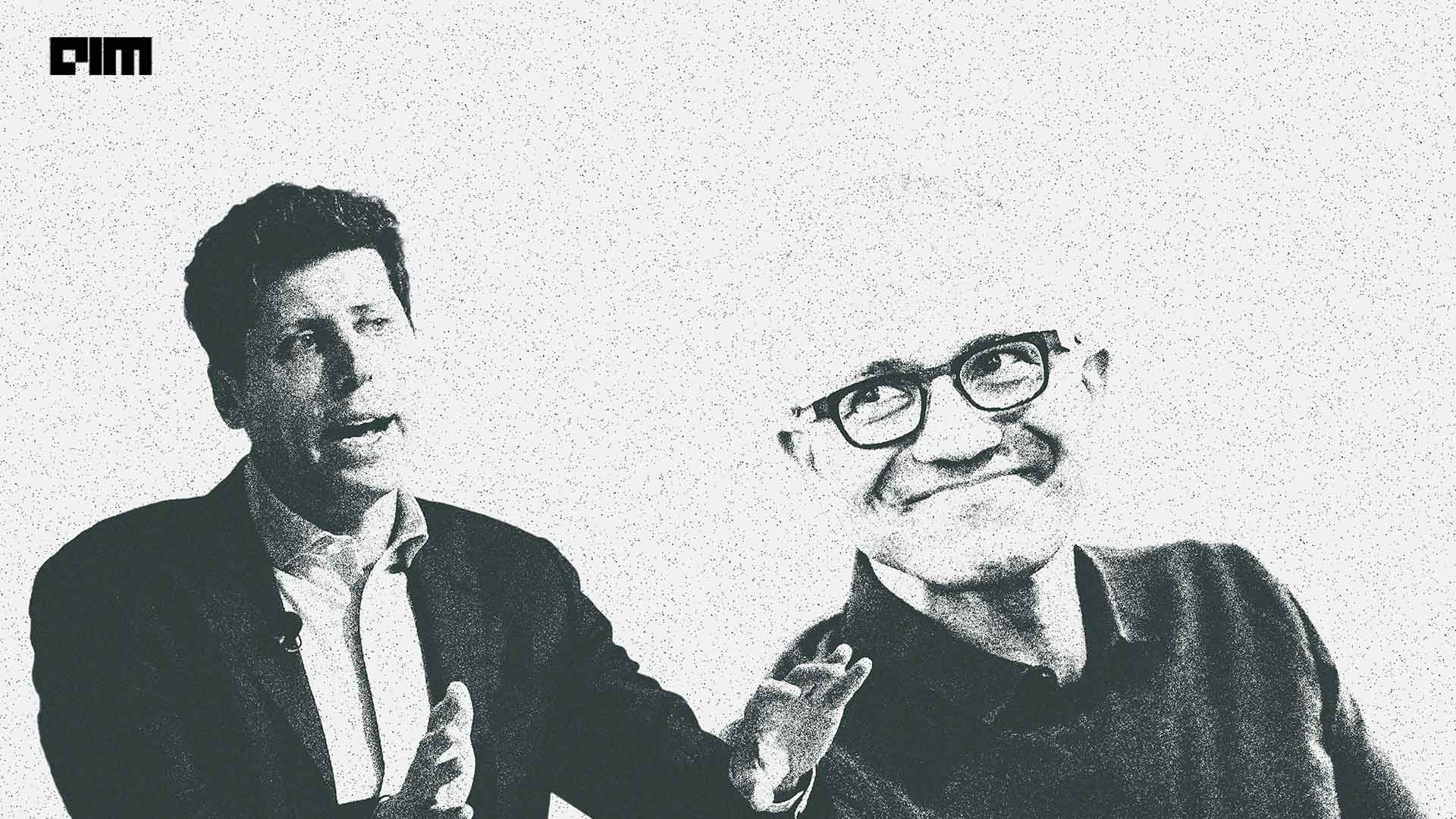
Emmett Shear, who was appointed the CEO of OpenAI on Monday may have lasted only 72 hours in the role, but it was still longer than Sam Altman’s stint as the leader of a new advanced AI research team at Microsoft. While Altman might be expressing his love to Emmett now, he is definitely sighing a relief for returning, as Altman wouldn’t have worked in Microsoft for long.

Shackles on Personal Ventures
When asked about Altman’s plans on pursuing his side projects when at Microsoft, Satya Nadella responded by acknowledging Altman’s broad interests and investments, and confirmed that they would work around it and the ‘governance aspect of it.’ However, he also emphasised in a cryptic manner that Altman would only work at Microsoft ‘if he wants to spend his full-time on pursuing the mission’ there, similar to how he would at OpenAI.
Unfortunately for Microsoft, Altman returned to OpenAI within the next few days. With a number of side investments that Altman has made into projects ranging from cryptocurrency, biotech, energy and many more, working for a major conglomerate will come with its limitations. As Nadella mentioned, the governance aspect, probably conflict of interest, would hamper Atlman’s involvement in those ventures.
Controlled Autonomy
Venture capitalist and CEO of Social Capital Chamath Palihapitiya, recently tweeted about the pros of an AGI coming from a startup vs that from a big tech company. He believes that startups are deemed preferable owing to their risk-taking nature and potential for pure, but potentially risky innovation. Whereas, AGI emerging from big tech companies is anticipated to be heavily regulated and constrained by terms and conditions, diminishing its true potential.
Furthermore, startups, driven by engineering initiatives, are seen as more likely to push the boundaries of AGI development, while big tech with its abundance of legal frameworks and market capital, may prioritise caution over groundbreaking advancements.
The autonomous nature of functioning that happens in a startup cannot be replicated in a big tech company. A reason that could have been a potential deal breaker for Altman.
Elon Musk did not forget to share his scepticism on the matter hinting that OpenAI being independent from Microsoft will avoid a concentration of power
Shrouded in Secrecy
Going by the latest developments on how a powerful AI that could possibly threaten humanity was made just before Altman’s ousting, the secretive nature of OpenAI allowed Altman and team to progress without hindrance – except for the board fiasco. However, with the way things are unfolding, with Altman’s close aide, Bret Taylor, already on board, with further more supporters expected, Altman is securing the future of his company which would allow him to work with confidentiality. A privilege that he would have never got at Microsoft.
Big Fish in a Small Pond
While autonomy is an important aspect, there is a cultural perk with growing a startup. Going by the insane level of employee support that OpenAI received, with over 700+ employees signing letters threatening to quit the company if Altman is not brought back, reflected the close-knit employee community he built in the company. Such a form of unity is highly unlikely in a big tech where the entire office decides to quit.
Considering the entrepreneur, tech guru Altman is, he would not have survived in a closer controlled environment that Microsoft would have provided. On a lighter note, Altman would have had to resort to using Microsoft products such as Teams, as opposed to Google Meet which OpenAI used for firing him – something even Elon Musk did not forget to take a dig at.

While Microsoft was all about showing love to OpenAI and going full swing on keeping Mac laptops and San Francisco office space ready for OpenAI employees, Altman chose to return to OpenAI. With an already existing solid symbiotic partnership between both companies, Altman at OpenAI would definitely work better for both. Altman’s return brings autonomy and unrestricted power, allowing OpenAI to continue on all its planned commitments. In the process, a win-win for all. Sam is happy, so is Satya.
The post Why Sam’s Return to OpenAI is Good For Microsoft appeared first on Analytics India Magazine.