

How Israel is Using AI to Defuse Hamas Militants
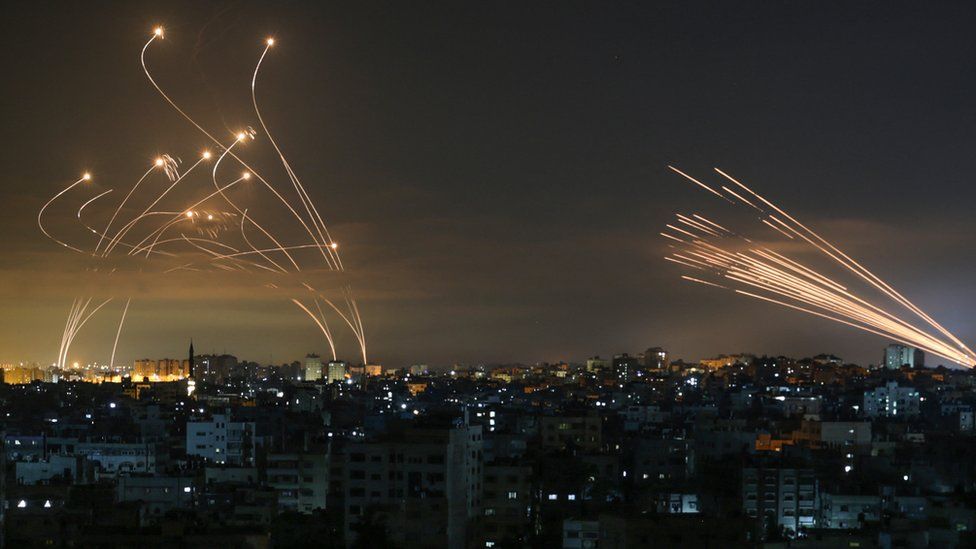
Israel has declared a state of war, after Hamas, a militant group which controls Gaza, attacked the border towns of Israel in the early hours of Saturday. There are more than 100,000 people displaced in Gaza as Israel continues to retaliate on Hamas’ attack.
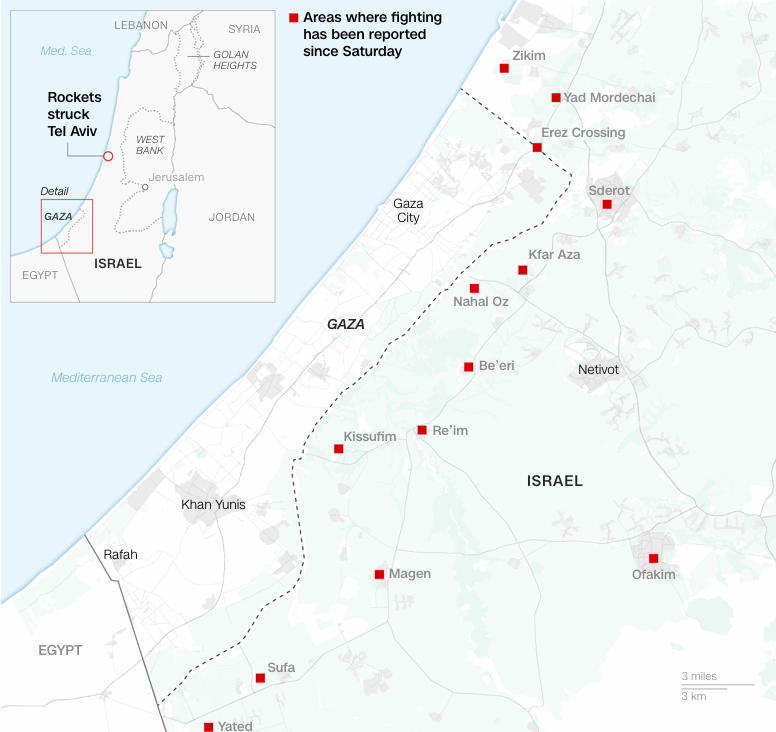
Credits : CNN
The casualties could have been significantly higher if the IDF had not deployed their ‘Iron Dome’ technology which is protecting the Israeli skies.
Israel’s Iron Dome System
Hamas, which is a Palestinian militant group, operating mainly from the Gaza Strip, fired at least 3,000 rockets in Israel on Saturday. The IDF said that it caused little or no harm as their Iron Dome air defence system intercepted almost 90% of the rockets being fired.
The main reason why Iron Dome was created was to intercept rockets and mortars being shot at Israel, at a close distance.
Iron Dome operates using radar technology. It detects an enemy incoming rocket, from up to 70 kms away; using predictive analytics and machine learning–works with data such as speed, weather and size) to calculate the trajectory and point of impact.

Credits : Bloomberg
The control centre analyses that information and subsequently launches a counter-missile to nullify the enemy rocket. If the enemy rocket is headed to terrains where it’s unpopulated and no damage is estimated, then the system doesn’t do anything.
How Israel has integrated AI into military
The Israeli Defence Forces are using AI to organise logistics during wartime, reduce time taken for decision-making and selecting targets. They use a system of AI recommendations which churches large amounts of data and selects targets for air strikes. After this, raids and logistics are quickly assembled using another AI software called ‘Fire Factory’–which uses data about targets to calculate ammunition loads, assign targets to fighter jets and military drones. It also prepares a schedule, saving loads of time and potentially lives.
All AI suggestions are overseen and corrected if necessary by human operators. Research agrees that the use of AI in modern warfare can reduce casualties, both from military as when as civilians.
This AI system is trained on thousands of hours of footage to identify people and objects. It interprets large amounts of drone footage, satellite imagery, electronic signals and online communications, according to Bloomberg.
In 2021, Israel had used the AI-software to identify rocket launchpads and deploy drone swarms. They also use AI to analyse satellite imagery. The IDF using AI, had raided weapon shipments in Syria and Lebanon which were to be delivered to Iran backed militants like Hezbollah.
“What used to take hours now takes minutes, with a few more minutes for human review,” said Col. Uri, who heads the army’s digital transformation unit to Bloomberg.
Israel is also using Facial Recognition technology to scaledown on Palestinians. The army had such extensive images, that one former soldier described it as the army’s secret “Facebook for Palestinians” , according to the Washington Post.
The operation is being conducted for over 2 years now called “Blue Wolf”. This is an effort by Israel to defend against terrorists.
Who’s Funding it?
Coming back to Iron Dome, it was initially developed without the help of the U.S, but from 2011, they started to support the program financially. Now, some of the missiles are made by the U.S. America is a huge support for Israel. They are signed a contract, where U.S will provide $38 billion in total from 2019 to 2028
Israel wants to become an AI “superpower” and to advance in autonomous warfare and combat decision-making, said the Director of Israel’s defence ministry.
“There are those who see AI as the next revolution in changing the face of warfare in the battlefield,” said Eyal Zamir, a retired army general, at the Herzliya Conference, an annual international security forum.
The details of how much the country wants to spend on this AI-revolution remains undisclosed.
The post How Israel is Using AI to Defuse Hamas Militants appeared first on Analytics India Magazine.


