

Google Flexes Edge AI through Pixel 8
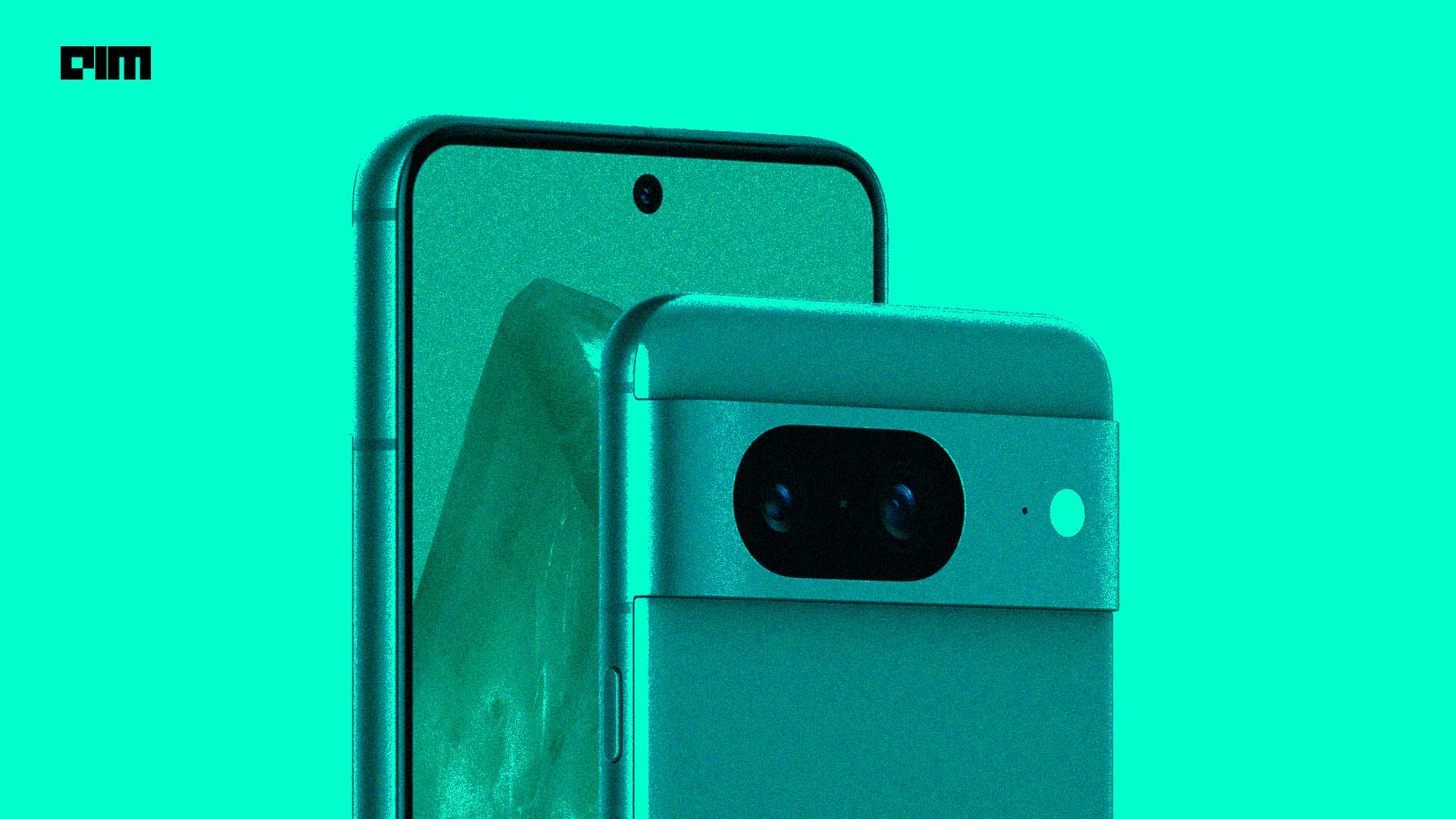
Google showed off their newest phone, the Pixel 8 and Pixel 8 Pro, at its Made by Google event. The new phone, which many tech enthusiasts say looks exactly the same as its predecessor, packs some impressive new features like a temperature sensor, an all new 48 MP camera and, the most innovative, the ‘On-device’ generative AI’.
The phone is powered by a Tensor G3 chip, which is a slightly modified version of Samsung’s Exynos 4 nm chipset.
The G3 will power the new ‘On-device’ generative AI–technology that is said to revolutionise the way we use our smartphones today.
On-device Gen AI will Change the Game
On-device generative AI, unlike conventional gen AI, generates context using the power and LLM already present in the device.
Gen AI on device will have access to user data which like photos, restaurant searches,, driving and texting patterns, and can generate solutions that are customised and helpful than generic responses from cloud-based gen AI like ChatGPT.
Another groundbreaking thing about this is that it can run completely without connecting to the internet. It has all the data it needs on the phone itself. This will also reduce latency issues as it doesn’t have to connect to a server.
Lot of companies use generative AI to help productivity, creativity and save time. Google has previously announced AI-enabled features for YouTube, and is constantly updating Bard to help it place itself in the ChatBot market. Now, its spotlight is on Pixel.
Google’s Paves the Way for On-device Gen AI
Google’s Pixel 8 will be the first phone to run on its generative AI models on-device. The G3 Tensor chip was built keeping in mind this feature. It is made to accelerate AI workloads. According to Rick Osterloh, SVP of devices and services at Google, it can run “distilled” generative AI versions of text and imaging.
“We’ve worked closely with our research teams across Google to take advantage of the most advanced foundation models and distil them into a version efficient enough to run on our flagship Pixel,” Osterloh said at the launch event.
The LLM running on Pixel 8 will power smart replies on Google’s keyboard. This will be done by using data already available on the device to analyse how the user usually replies to messages.
Using Gen AI,Google’s ‘Magic Eraser’ is enhanced and it can generate new pixels to fill in the spaces left on an image where anything was removed. It has also improved its Zoom where AI can intelligently better the details of the picture.
Now users can use the power of generative AI to summarise audio recordings and highlight important points.
The Tensor G3 chip allows the new phone to run twice as much machine learning on the device. The LLM on the Pixel 8 is 10 times more complex than the on the Pixel 6, Google said in a statement.
What has Apple been Doing?
The iPhone maker is rather silent when it comes to betting on generative AI. They have been known to keep quiet about their foray in this arena unlike Microsoft and Google which generally make a lot of noise when it comes to AI.
Apple has been integrating ‘Neural Engine’ in its new iPhones and watches, where the chip is twice as fast to process ML tasks. Neural Engine is what Apple calls the building blocks for its chips that accelerate AI functions, Reuters said.
Besides, Apple is silently working on “Ajax” an internal chatbox, to help employees in phone prototyping. They have also been working on Apple GPT, according to a report from Bloomberg. The company is known to integrate AI-powered technology on many applications like camera, iMessage and Siri.
Google, Microsoft, Apple among others are moving towards adopting generative AI to stay ahead, and capitalise on its salient features it offers. Because these IT giants know that, if they miss the bus on the AI-boom, it’s going to hurt them badly.
The post Google Flexes Edge AI through Pixel 8 appeared first on Analytics India Magazine.