

OpenAI, Google, Meta, Microsoft Asked to Pay 8000 Authors for AI Plagiarism
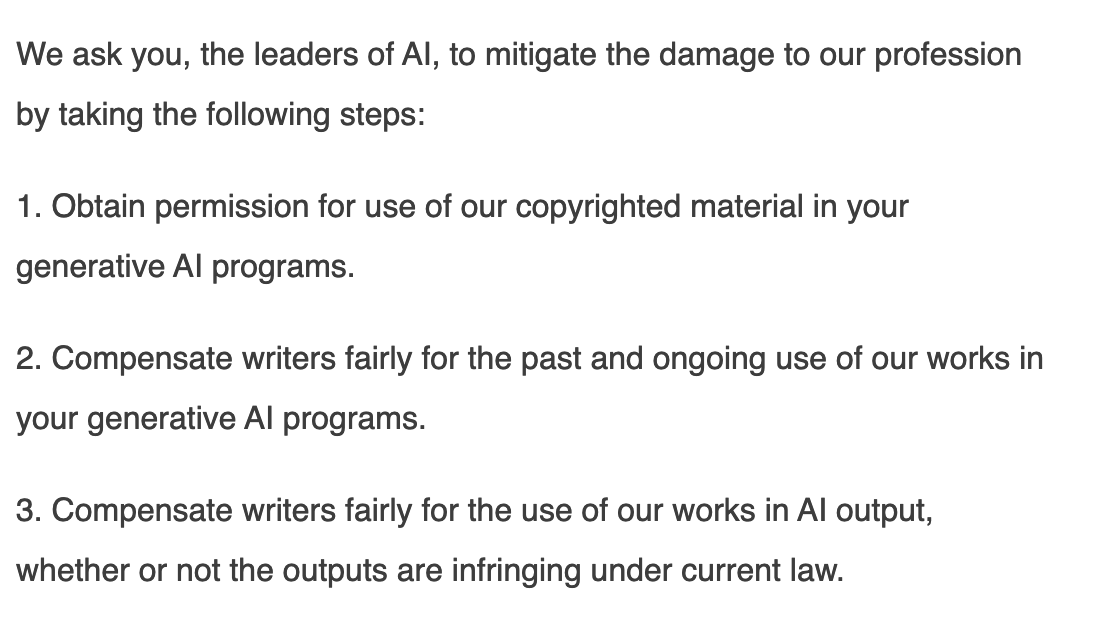
In a move towards tackling AI plagiarism, over 8,000 authors have collectively expressed their concerns in an open letter initiated by the US Authors Guild, urging the leaders of six major AI companies to seek consent and offer compensation for using their copyrighted work to train models.
The letter, directed to the CEOs of OpenAI, Alphabet, Stability AI, Meta, IBM, and Microsoft, asserts that the existence of generative AI technologies, based on large language models (LLMs), is indebted to the writings of these authors. “Generative AI technologies built on large language models owe their existence to our writings.”
The authors argue that these AI systems mimic and reproduce their language, stories, styles, and ideas, effectively benefiting from millions of copyrighted books, articles, essays, and poetry without any compensation.
The Authors Guild’s CEO, Mary Rasenberger, stated that the purpose of the letter is to encourage companies to reach settlements with authors outside of the courtroom, as lawsuits can be expensive and time-consuming. However, some authors have chosen a more aggressive approach and filed lawsuits against those they believe have plagiarised their work.
Similar to this, in May, the Writers’ Guild of America (WGA) also began a protest against the use of AI in writing scripts for movies. The WGA’s lead negotiator, Ellen Stutzman, also highlighted during the protests that some of their members refer to AI as “plagiarism machines.” The struggle between proper attribution and copyright about generative AI technology is ongoing, and needs resolution soon.
LLMs like GPT, even the recent Llama-2 by Meta, have been built by scraping information from across the internet, which includes most of the websites on the internet. To tackle this, OpenAI has recently signed agreements with other organisations to access data for training its generative AI systems. For instance, they struck a deal with the Associated Press, granting them access to text archives dating back to 1985, while the news agency receives access to OpenAI’s technology and expertise.
Also Read: Is AI Copyright Really Necessary?
The post OpenAI, Google, Meta, Microsoft Asked to Pay 8000 Authors for AI Plagiarism appeared first on Analytics India Magazine.


