Meta is The Real Decentralised Social Media Star With Threads
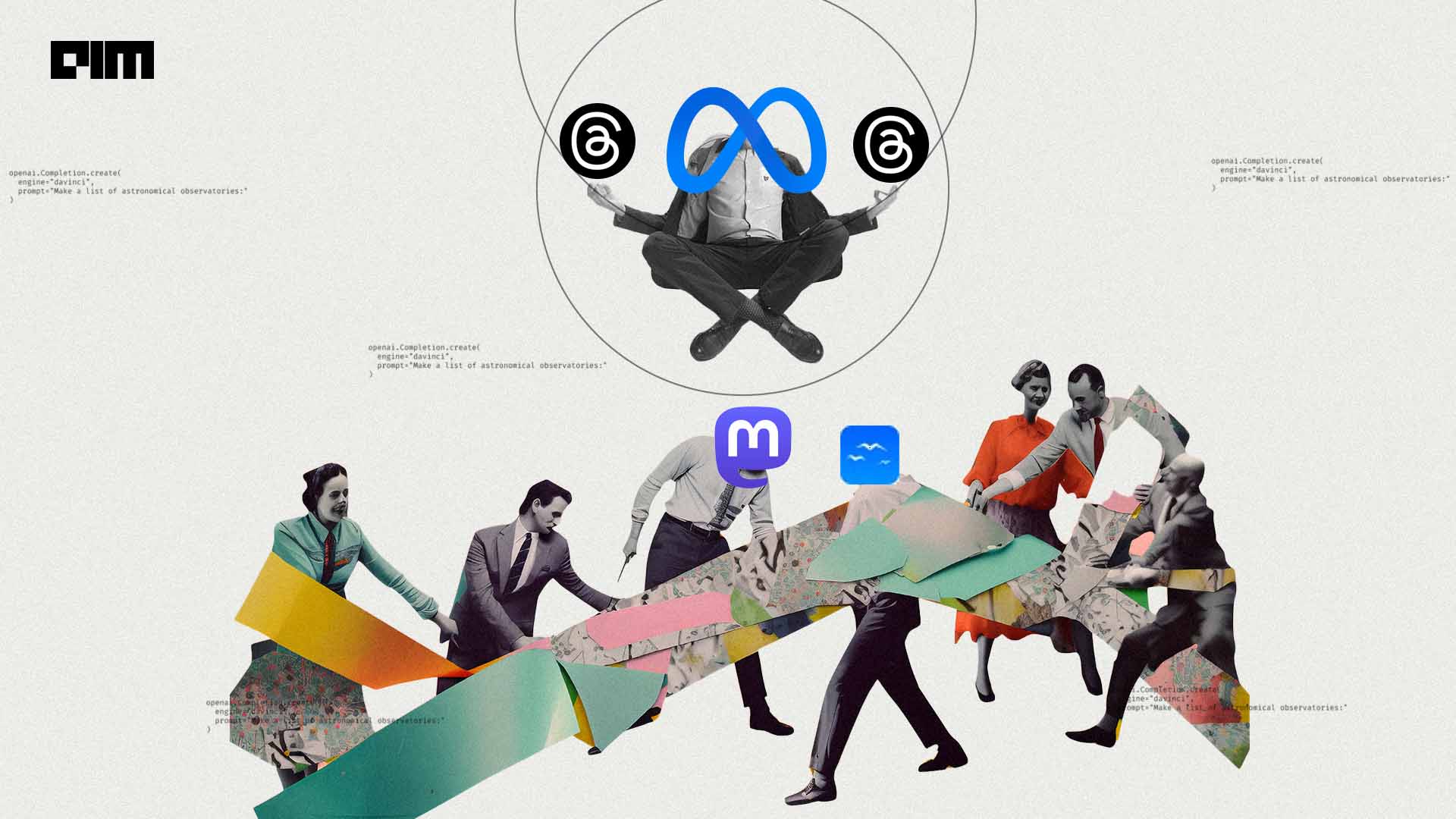
Meta in a blogpost on Wednesday announced that its new offering “Threads” will soon be built on ActivityPub, a protocol that is used to post on other decentralised networks. This is unique as it would make Threads interoperable with other platforms like WordPress, Mastodon and Bleusky.
Meta’s plan is to convert Threads into a fediverse platform, a new type of network that allows people to follow and interact with each other on different decentralised social media platforms, such as Mastodon and Bluesky. This would also enable an individual with a public profile on Threads to have an audience across similar decentralised applications. Alternatively, with a private profile, you can approve followers and interact with them, similar to instagram.
“An individual from other fediverse platforms can find people on Threads using full usernames, such as ‘@mosseri@threads.net’,” said Instagram head Adam Mosseri.
These additions would give Threads an edge over twitter allowing new types of connections. It would be one of the few platforms of its kinds which would also allow you to carry your audience over as well.
Threads Reaping The Fruit of Mastodon’s Labours
Launched in 2016, Mastodon was the first decentralised microblogging platform built on the ActivityPub protocol. It gained popularity because it allowed users to exercise more control over their data and flexibility in comparison to a centralised platform like twitter. It was a noble idea, but couldn’t make much impact until Elon Musk announced to take over Twitter.
Social media users looked out for alternatives and Mastodon was there. In early December 2022, it hit an all time high of 2.2 million active users. But the numbers didn’t hold for long. In January 2023, the user base fell down 30% to 1.8 million. The current user base has shrunk to 1.4 million.
On the other hand, Bluesky launched by ex-Twitter CEO Jack Dorsey is attracting former Twitter users and people who haven’t quite adapted to the more formal and organised settings of Mastodon.
It was recently reported that its systems were experiencing “some degraded performance” as a result of record-high traffic. Its community has topped 50,000 users because it is an invite only platform. However, the Twitter alternative has over 375,000 worldwide instals on iOS as of April.
Though the early decentralised players haven’t been able to make a bigger impact, Meta is going all in on the decentralised social media front. It claimed in its blogpost that it believes that “decentralised approach similar to protocols governing email and the web itself will play an important role in the future of online platforms”.
It seems like Meta’s bet paid off. In just over 24 hours since the app was rolled out, it has got 50 million users.
The company could reap all the benefits of the work put in by Mastodon and Bluesky to create an appeal and user base of a decentralised platform. It could benefit from their learning, and strike a balance between a formal and organised setting of Mastodon and an informal site filled with memes and shitposting like Bluesky.
Threads could also strike a chord because of the already existing monthly user base of more than 2 billion on Instagram—because an individual can sign up to threads using an already existing Instagram account.
Besides giving an open experience in terms of followers and interaction across platforms, developers can enhance user experiences and introduce features that can be seamlessly incorporated into different open social networks. Meta has also signalled that threads is one of its many offerings which would be compatible with an open social networking protocol.
Meta’s Threads move can also steer the entire decentralised ecosystem. Each decentralised platform could also establish its own community standards and content moderation policies, granting users the freedom to choose spaces that align with their beliefs and values.
The post Meta is The Real Decentralised Social Media Star With Threads appeared first on Analytics India Magazine.