

Why Need Teachers When You Can Have AI?
GPT engineer is the newest addition to make your life simple. Akin to a dedicated teacher, you can ask it to help you build anything. The AI will ask for clarifications, and you can finish any coding project in minutes: self-learning has never been easier.
With the availability of options such as applications that help build and assist with anything, free classes on building neural networks by industry experts, free courses on Generative AI, people are slowly getting spoiled for choice when it comes to self-learning. With the availability of these many options, where a person can self-teach and upgrade their skills relevant to today’s world, what is the role of traditional teachers? Will they continue to be pertinent today?
AI Competes with Teachers
ChatGPT doing my homework
— Victor Beit ? (@im_beit) June 13, 2023
Self-learning and online study courses have always been around. Coursera, Udemy, Khan Academy and many other study platforms offer various courses and study material for anybody. However, with the rise of ChatGPT, all forms of learning courses, either keeping AI as the focus or using AI to assist with teaching, have risen.
The AI revolution has opened up avenues for people to upskill and learn on their own. Utilising applications that can help with coding, research, data analysis and myriad other functions that would have traditionally required some form of formal training, is now almost eliminated.
The availability of a large number of ChatGPT plugins has opened the doors for executing a wide range of functions. With Code Interpreter plugin, multiple tasks including visualisation, analysis and data transformation can be done, pretty much equipping a person to become a data scientist of sorts. With the Wolfram plugin, all forms of powerful computation, access to real-time data, solving maths, learning science and other subjects can be easily done. A user can get access to any form of information and self-learn without the need of a teacher.
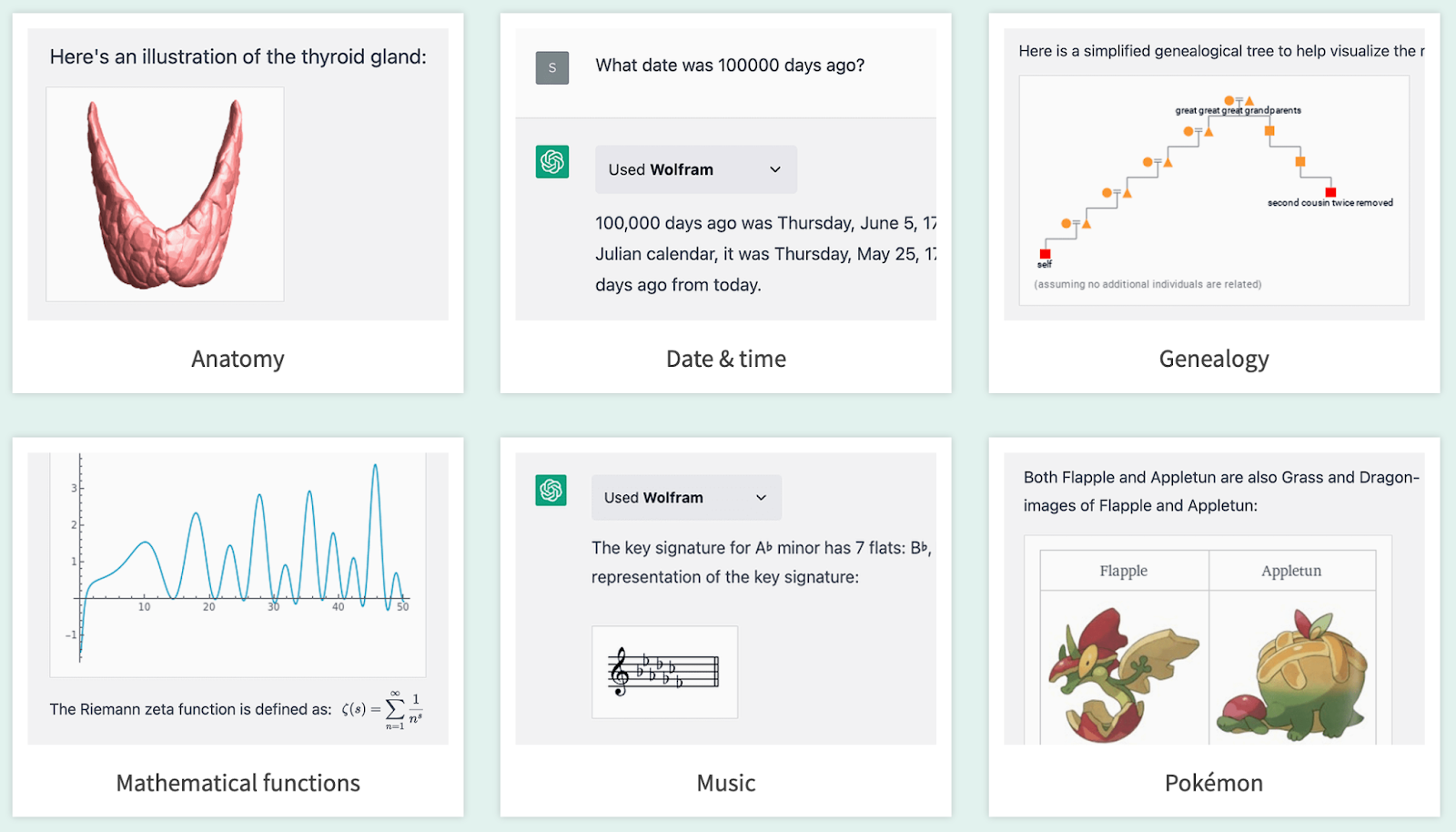
Source: Wolfram
You even have an increasing number of AI agents that are designed to perform tasks autonomously and intelligently, which also raises the question of the efficacy of traditional teaching subjects. If we are building tools that are said to simplify a majority of operational tasks, then what will the value add of today’s teaching bring?
Improvise or Perish
Accepting that there is no escape from AI, the failing edtech giants are now customising their models by embracing AI-powered tools to stay afloat. Khan Academy launched Khanmigo which is a GPT-4 powered virtual tutor and guide.
Similarly many other edtech platforms are now looking at incorporating LLM-powered applications to customise their teaching approach. Recently, upGrad spoke to AIM stating that they are planning to build their own LLM models to help learners. They already have GPT-powered chatbots to guide and improve their learner’s skill sets.
A number of edtech firms have recently faced the brunt of over expansion and improper planning owing to the pandemic. With massive layoffs across companies, edtechs had to let go of a number of employees. To add to the woe, the rapid expansion of ChatGPT pushed companies towards losses. Last month, US ed tech firm Chegg experienced a loss of close to $1 billion in market capitalization.
Indian education company Doubtnut, which aids students with NEET and IIT JEE has also faced workforce reduction.
In spite of Indian edtech BYJU’s being on a firing spree with 1000 employees expected to be laid off soon, the company recently launched their AI suite of models for hyper-personalised learning. The company launched BYJU’s Wiz which is a suite of three AI models – BADRI, MathGPT, and TeacherGPT.
Future of Education
CEO of Replit, Amjad Masad, tweeted the below picture of how future education will look : a collaboration between tech and teaching.
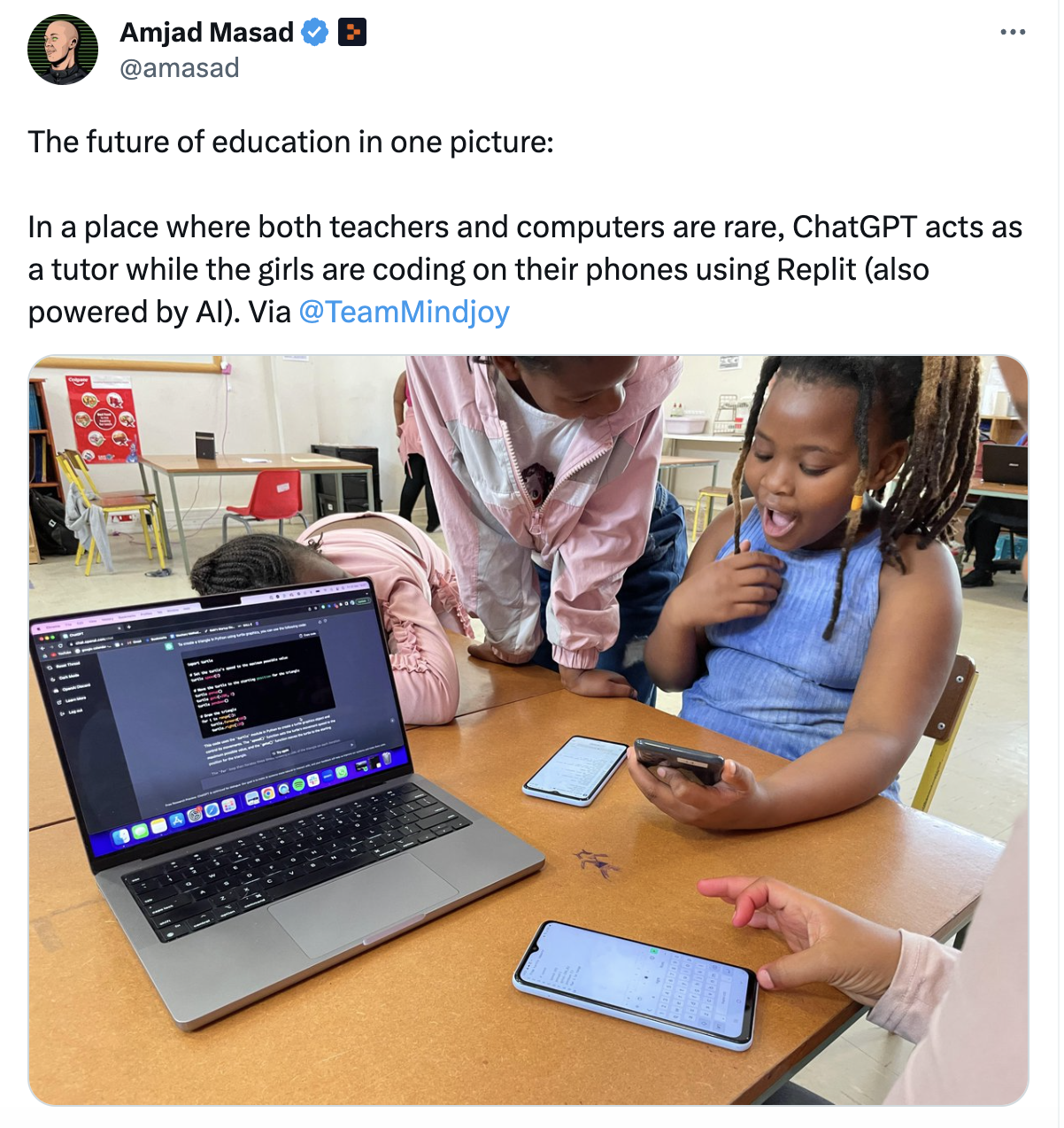
The idea of completely eliminating teachers seems a little too far-fetched. Through collaborative work with AI, teachers can adapt to the changing landscape and impart relevant knowledge.
For example, teachers can look to utilising AI tools to support their teaching functions and to probably make it more interactive. With text-to-image generation tools such as Dall-E, Midjourney, and many more, teaching can be made creative through visual storytelling without the need to actually learn how to do it. Creative Arts is another area where AI tech is now gaining prominence and can probably be utilised by teachers too. MusicLM, a text-to-music tool can be used to transform creative boundaries.The scope goes beyond just teaching the students. Teachers can use these AI applications to help assess and evaluate students and assist with other tasks. It not only saves time but also helps them focus on tasks that require human intervention.
The post Why Need Teachers When You Can Have AI? appeared first on Analytics India Magazine.
