

Miserable Meta Banks on AI Ads with Sandbox

Meta recently launched AI Sandbox. Termed as a ‘testing playground’ for new tools and features, such as generative AI-powered ad tools, their aim is to understand what works for advertisers and include those features in their ad tools. A late entrant to the space, Meta’s struggle for relevance in the generative AI space is evident with this release. But is this going to change anything for Meta or will it just be another frivolous pursuit?
With AI Sandbox’s advanced features, tasks such as text variation, background generation, and image outcropping can be done easily to help advertisers make their ads engaging and creative as per their requirement. They can cater to their target audience and fit the campaigns as per different aspect ratios for various platforms such as Stories and Reels.
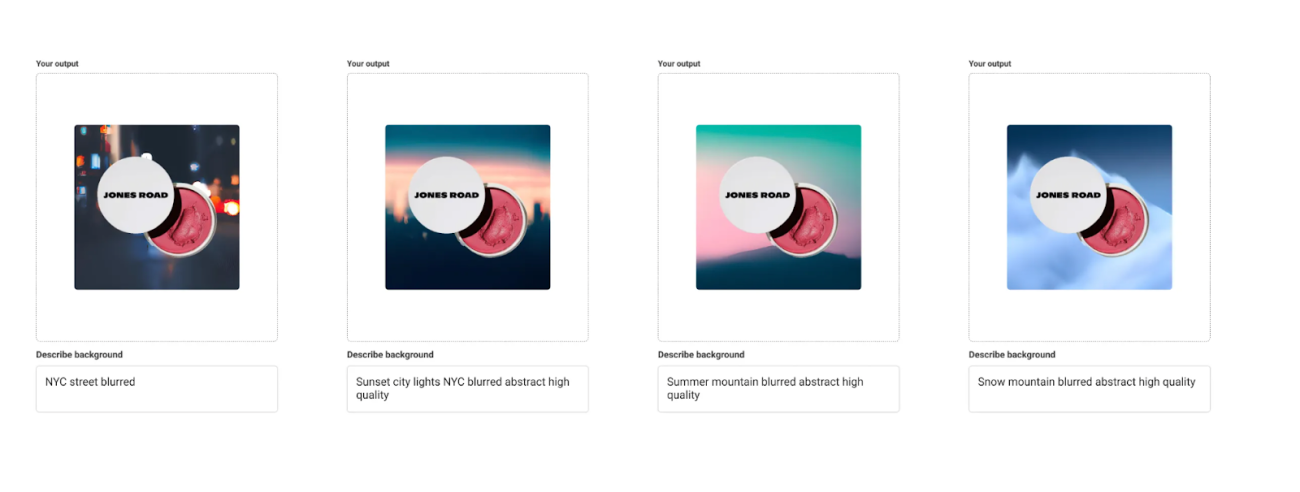
Background generation in the Meta tool. Source: Facebook News
Introducing an AI-powered tool for advertisers may not be a revolutionary step for Meta, considering how there already are dominant AI image generation tools to churn out images catering to every user input. In addition to the top players such as Midjourney, Stability AI, and Dall-E, there are a number of tools that offer text-to-image generation seamlessly.
While Meta is still experimenting with text-to-image generation, the AI world around it has rapidly advanced. With tools that can convert text to video, Meta’s AI Sandbox appears plain ordinary. And with advertisements being made out of AI, Meta has a long way to go.
Playing Catch Up
Meta has been chasing the AI dream for quite a while now but has unfortunately always been playing catch up in the generative AI segment. After OpenAI’s GPT-3, and Google’s PaLM, Meta was late to release LLaMA, its foundational language model, towards the end of February. In the chatbot race though, Meta has been one of the first few. It released an LLM chatbot called BlenderBot3, which failed to take off.
However, Meta’s biggest unrealistic futile venture happens to be the Metaverse. As per a report in October last year, Meta has spent over $36 billion in building Metaverse but has remained unprofitable. As per the earnings report of Q4, the company lost $4.2 billion and $13.7 billion over the year on their Reality Labs segment. Reality Labs is a subsidiary owned by Meta that focuses on VR and AR technology and leads research on the Metaverse.
Ads, the only lifeboat?
As per a report, Meta’s ad revenue is expected to touch $153.76 billion in 2023, and it will be the third consecutive year where revenues surpass $100 billion. However, a slowdown in growth is indicated when compared to the previous year. The digital ad market dominance created by Google and Meta over the years is seeing a shift. For the first time since 2014, both the company’s advertising market share dropped below 50% owing to players such as Amazon and TikTok which saw an increase.
There have also been reports that Google will be releasing generative AI advertising tools this year.
Irrespective of the progress, Meta is pretty clear in continuing its investments in the AI field. Through the AI Sandbox announcement, Meta has indicated that it will increasingly invest in AI capacity for advertising purposes. The company is utilizing advanced AI models that will help optimize different types of ads on the platform. For instance, on Instagram there were different models for different purposes. If one model focussed on getting more clicks for Story Ads, another aimed to increase conversions or sales for Reels. With the company’s new focus on AI, ads across all areas of Instagram, including Feed, Stories, Explore and Reels, will be optimized.
While Meta continues to move forward with Generative AI in advertising space, the question of privacy and security will remain. Akin to how image generation companies are facing the heat on training data that borders on artist plagiarism, it is possible that Meta might bear the brunt in the future. The company has not given any clarity on what images are used for training their model.
The post Miserable Meta Banks on AI Ads with Sandbox appeared first on Analytics India Magazine.