
Resurrecting the Dead
After the tragic death of her partner, Martha, a grieving widower, comes across a service that lets people stay in touch with the deceased. This is the plot of an episode in the Black Mirror anthology series which explores the darker side of tech.
The episode, called ‘Be Right Back’ was released in 2013; however, with AI, keeping your loved ones’ consciousness alive, even after they are dead, could be a reality.
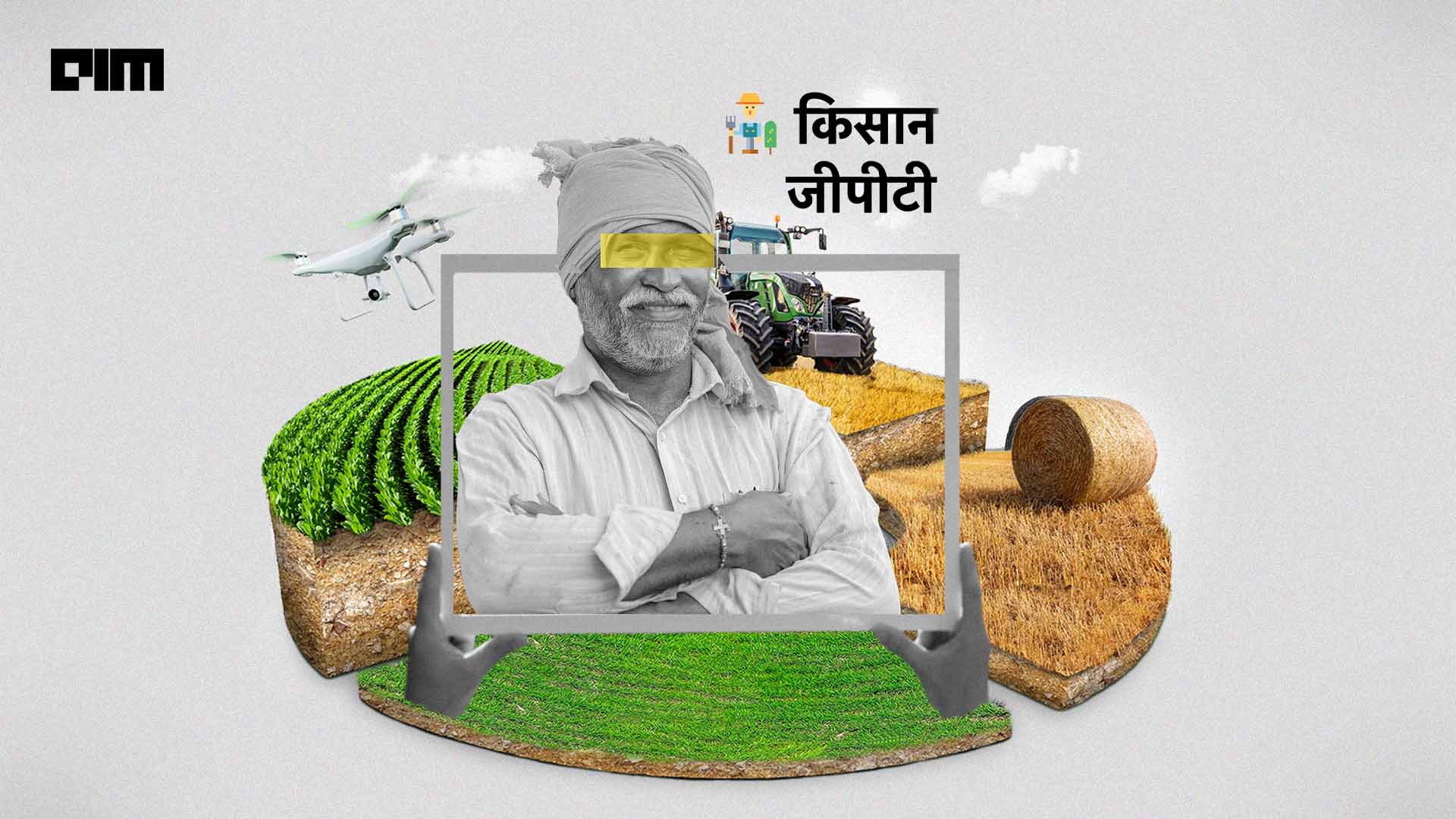
Pratik Desai, the creator of KissanGPT, believes something similar could be possible by the end of this year.
“Start regularly recording your parents, elders and loved ones. With enough transcript data, new voice synthesis and video models, there is a 100% chance that they will live with you forever after leaving their physical body,” he said in a tweet.
The idea is to gather sufficient data to construct a digital avatar in the form of a software, chatbot, or even a humanoid robot that resembles the individual’s loved one, allowing them to live on in a sense, forever.
However, Desai faced severe backlash for the tweet. Many made comparisons to the Black Mirror episode, which delves into the aftermath of excessive dependence on technology as a means of dealing with mourning and the passing of someone close.
A dangerous territory
Desai received criticism because death and grief are an inevitable and natural process of life.
Although using AI to preserve the consciousness of our loved ones may be achievable, it could ultimately prolong the grieving process and result in further negative outcomes.
Even in the Black Mirror episode, Martha struggles with the ethical and emotional implications of interacting with a virtual version of her deceased partner.
Theo Priestley, author of ‘The Future Starts Now’, responding to Desai’s tweet, said, “Not only are they ‘not’ your parents but this is so unethical and counter to natural grief it’s insane. It’s transference at best, at worst, it’s preventing a person from overcoming their grief.”
Similarly, a twitter user said that the AI will never be his/her parents. Instead, they will be interactive tape recordings of them.
Another user said that it’s absolutely ghoulish to consider your family and friends as data to be immortalised with AI rather than as living, breathing people.
Besides, concerns related to AI’s ability to bring back the dead is that it will most probably be available as a service provided by companies looking to profit from it.
“What happens when you can no longer afford the subscription to have your dead relative around to talk to?” Priestley asks.
Imagine a scenario where companies use AI-generated versions of our loved ones to sell products.
This could give rise to serious concerns around privacy, exploitation, and emotional manipulation.
Desai clarifies
In a conversation with AIM, Desai mentions that the tweet was taken out of context. To elaborate, he recounts a deeply personal experience that influenced his thought behind the tweet.
When Desai, who resides in the US, had a daughter, his grandmother in India was eager to meet her.
“We had a girl in our family after a very long time and she was very excited to meet her.
“I was very close and we had many things planned. But she passed away weeks before our scheduled trip to India,” he said.
Desai, who was very close to his grandmother, was devastated and he regrets not having any recordings of his grandmother to show to his daughter.
Clarifying further, Desai said that what he had in mind was a tool that would read bedtime stories to his daughter in her grandmother’s voice.
Given the technology we have now, creating a tool, with consent of the person, is very much possible. However, what he never intended was to create a Black Mirroresque type scenario.
Uploading consciousness, a possibility?
While Desai said keeping your loved one’s alive through AI could be possible in a year or so, we wondered how true his statement was. Surprisingly, or shockingly for some, Desai could be speaking the truth.
Last year, 87 year old Marina Smith MBE managed to speak at her own funeral. Smith, who passed away in June 2022, was able to talk to her loved ones at her own funeral with an AI-powered ‘holographic’ video tool.
The conversational video technology was invented by StoryFile, an AI-powered video platform that is cloud-based and automatic, bringing the power of conversational video into everyone’s hands.
Similarly, Somnium Space, a metaverse company, founded by Artur Sychov is already offering a similar service called ‘Live Forever’. Sychov wants to create digital avatars of people, who will be accessible by their loved ones, even after their death.
“We can take this data and apply AI to it and recreate you as an avatar,” Sychov told Vice.
“You will meet the person. And you would maybe for the first 10 minutes while talking to that person, you would not know that it’s actually AI. That’s the goal,” he said.
Interestingly, former Googler Ray Kurzweil spoke publicly about using technology to keep his father’s consciousness alive, even after his death way back in 2010.
He spoke publicly about his interest and very recently, Kurzweil also predicted that humans will achieve immortality by 2030. Tools to facilitate this already exist, and the technology is only going to get better with time.
Hence, despite the ethical concerns surrounding it, the desire to reconnect with deceased loved ones could be a powerful driver for the demand for these technologies.
The post Resurrecting the Dead appeared first on Analytics India Magazine.