

Meet the Indian Scientist who Solved the Protein-Folding Challenge
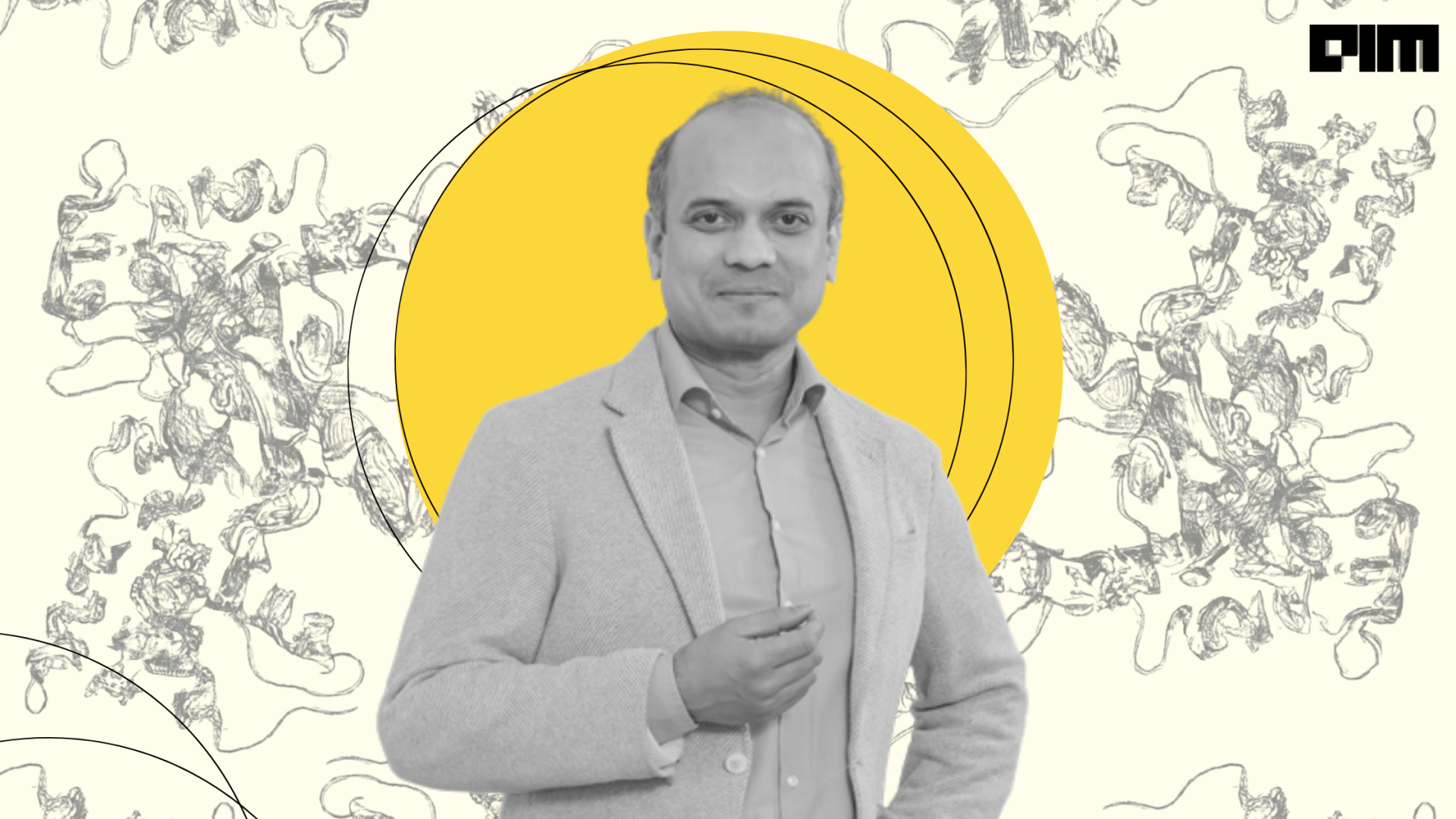
Indian-origin physicist and code expert Dr Sandipan Mohanty, recently collaborated with scientists from Lund University in Sweden to use a quantum computer to examine protein folding. He has worked on molecular biology simulations for supercomputers for over 20 years and is presently a scientist at the simulation and data lab biology of the Jülich Supercomputing Centre.
The IIT-Kanpur graduate went on to get a PhD and Post Doctoral in theoretical physics from Lund University.
The aim of Mohanty’s research was to show the viability of quantum computers for non-trivial research questions in their field. The team specialised in Monte Carlo simulations which is a process based on statistical physics and stochastic sampling.
Read more: New Algorithms That Harnessed Protein-folding Power in 2022
Process
To address the issue of protein folding, the researchers used a simplified HP model on a D-Wave machine. By maintaining only the bare minimum physical details necessary for the folding process and categorising amino acids into two groups, the HP model simplifies the problem.
Results
The scientists discovered that the quantum annealer outperformed classical computers in identifying the lowest energy structures, with a success rate of 10 percent compared to classical computers’ success rate of 80 percent for a chain of 30 amino acids.
Since the computing work required by classical computers to account for all important protein conformations exponentially increases with the length of the protein chain, the quantum computer is more accurate than a classical computer.
The quantum mechanical couplings allow them to directly do the approximation. The quantum annealer generates findings with significantly shorter run times for accurate responses.
More Research Avenues
The majority of quantum computers only have a few qubits, which makes it challenging to run simulations like those used in drug research. According to Mohanty, it will take two to three more generations of devices before we can run more intricate simulations.
However, this study represents an important first step in the use of quantum computers in biological research, and it has the potential to improve our comprehension of diseases by protein misfolding.
Proteins form the crux of the human body. The capacity of a protein to attach to other molecules, conduct chemical processes, transport molecules across cell membranes, and carry out numerous other vital functions for life depends on its precise shape. If a protein folds incorrectly, it can lead to the formation of harmful structures called misfolded proteins, which can cause fatal diseases such as Alzheimer’s, Huntington’s, and cystic fibrosis.
Read more: Protein Wars Part 2: It’s OmegaFold vs AlphaFold
The post Meet the Indian Scientist who Solved the Protein-Folding Challenge appeared first on Analytics India Magazine.


