

Indian Researcher Solves a 2,500 Years Old Sanskrit Problem for NLP
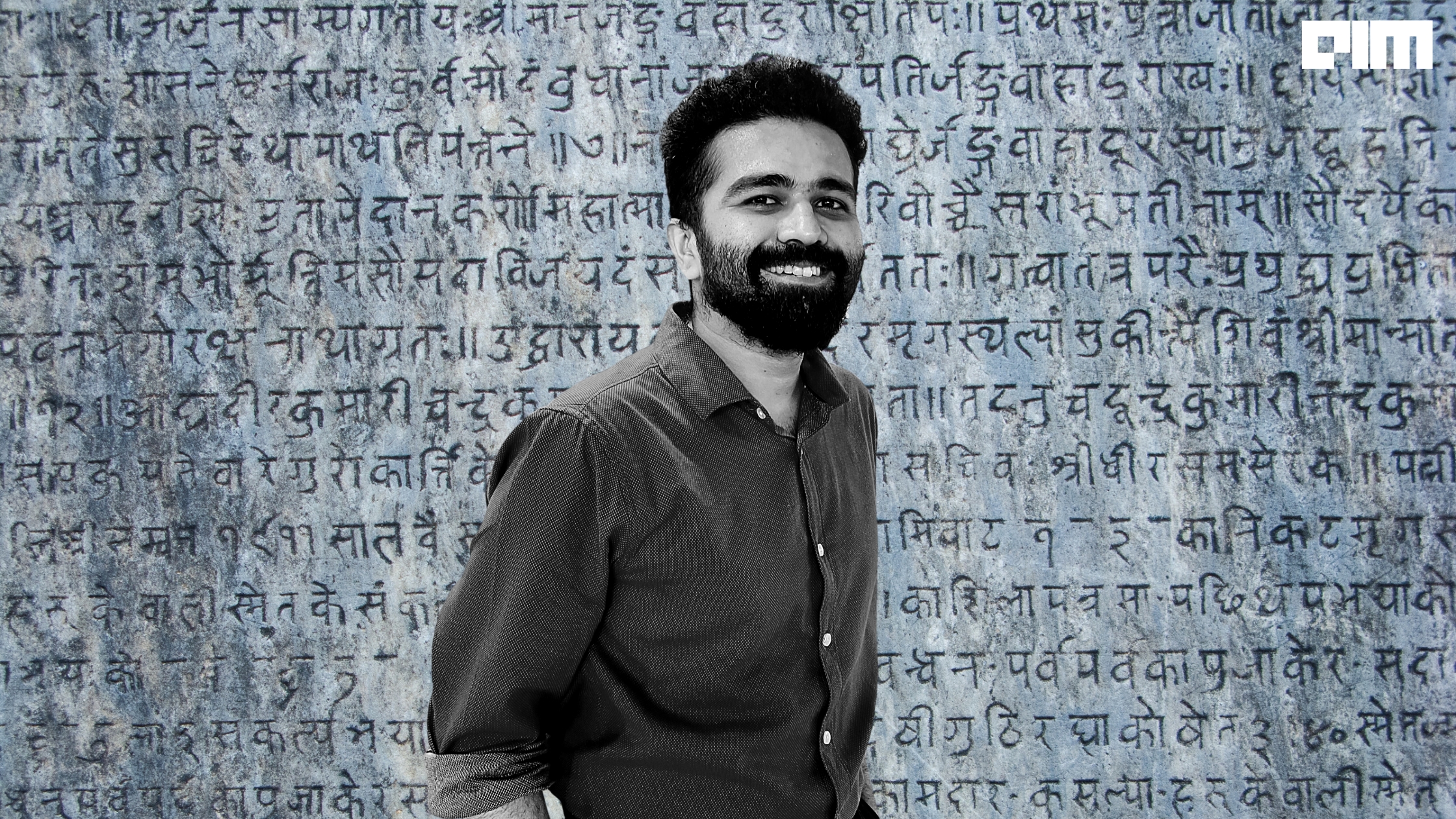
Rishi Rajpopat, Ph.D. student at University of Cambridge, made a major breakthrough to solve a 2,500 years old problem that has been baffling Sanskrit scholars. Decoding a rule taught by the father of linguistics, Panini, the discovery now makes it possible to derive Sanskrit words, that includes creation of “mantras” and “guru” using the language machine.
Rajpopat’s thesis, titled – “In Panini, We Trust: Discovering the Algorithm for Rule Conflict Resolution in the Astadhyayi”, solves the issue of conflicting rules in Panini’s system, called Astadhyayi, where Sanskrit researchers could not predict the grammatically correct results.
Rajpopat said that teaching natural language processing models how to combine a speaker’s intention with Panini’s rule-based grammar would be a milestone for producing human speech.
What is the Panini System?
The Panini system consists of 4,000 rules written in 500 BC that work like a large language model to generate grammatically correct sentences through a step-by-step process. This requires an algorithm. The “rule conflicts” in the Panini machine is where two or more rules are applicable at the same step. Panini developed several metarules to solve this but Sanskrit scholars could not interpret and decide which rule to use for the correct output.
Then the scholars developed several other metarules, but Rajpopot showed it is unnecessary and inefficient as the Panini’s “language machine” is itself sufficient. He found that P??ini’s “language machine” could produce grammatically correct words and sentences with almost no exceptions.
Rajpopat’s PhD supervisor, Professor Vincenzo Vergiani said that the discovery is revolutionising when the study of Sanskrit is a rising interest across the globe.
The post Indian Researcher Solves a 2,500 Years Old Sanskrit Problem for NLP appeared first on Analytics India Magazine.


