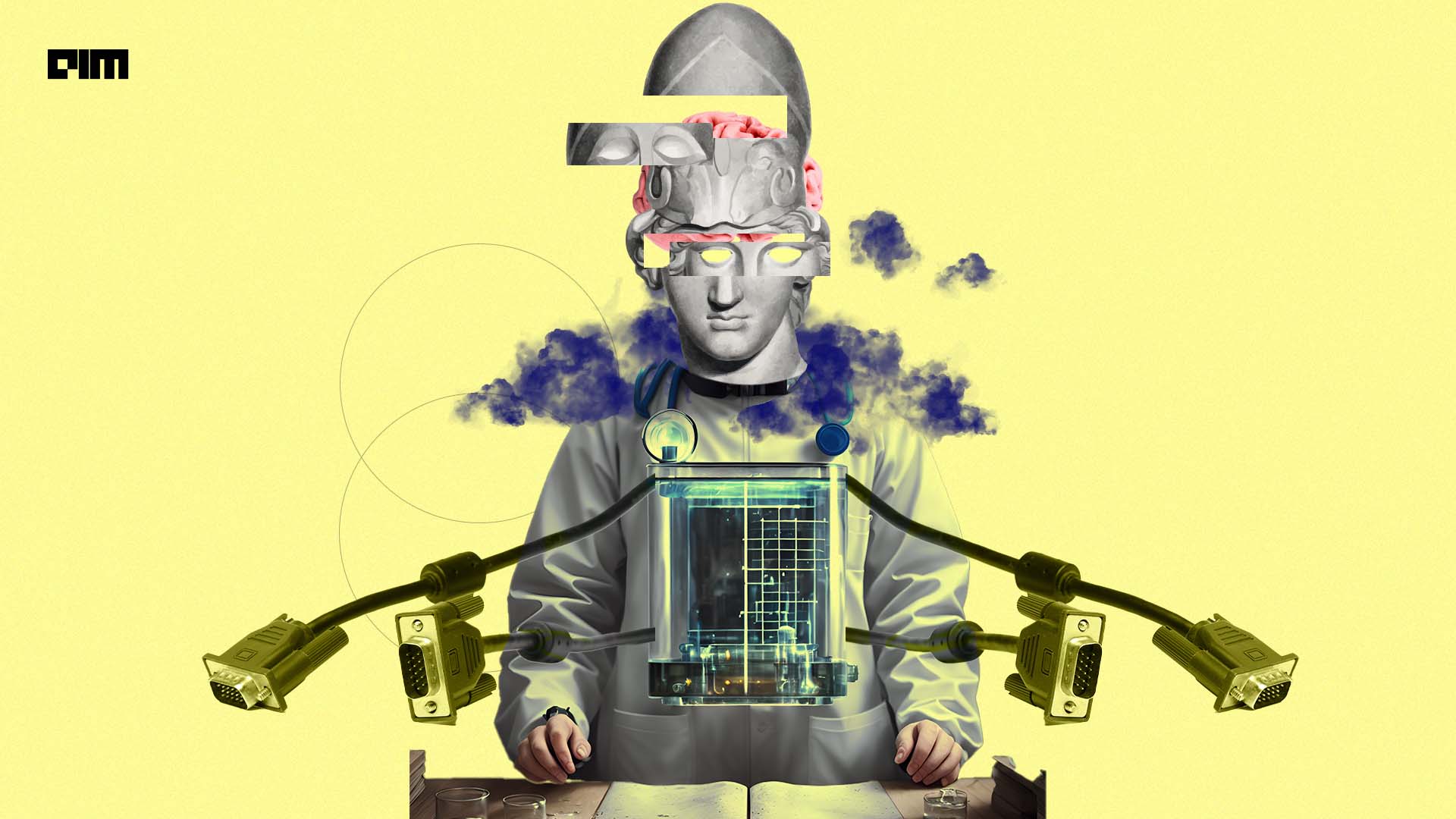

When Androids Dream Of Electric Sheep
Recently, Elon Musk’s startup, Neuralink, has wired up a monkey to play video games by planting a computer chip in its skull. Neuralink is trying to develop an implementable computer-brain interface to increase information flow rate from the human brain to a machine. The San Francisco- based neurotechnology firm comprises a team of around 100 people.
In the light of recent developments, we look at some of the ethical implications of introducing such devices in the human brain.
“It is very likely, within a century or two, Homo sapiens, as we have known it for thousands of years, will disappear”
Yuval Noah Harari, Philosopher and Best-selling Author of ‘Sapiens’ and ‘Homo Deus’
Free Will
According to Musk, humans are already Cyborgs since they have a tertiary digital layer in the form of phones, computers, and applications. While this might not be as sophisticated as putting chips in our brains, technology holds a lot of power over us.
In the future, if cutting-edge tech hardware makes its way into human brains, the machines might take over our decision-making faculties. Meaning, the prosthetic makers can program us(ers) to further their agenda. When the Orwellian overlords make decisions for us, the human agency and free will are at stake. The deep state and deep tech mix well. Such overarching technology could double as a surveillance system — Imagine living under the constant gaze of Panopticon.
On the other hand, the privileged humans will harness advanced algorithms to become a super race of sorts- capable of interplanetary travel (Refer: Blue Origin, SpaceX), and probably a shot at immortality (Refer: Calico, Sierra Sciences). But, there is always a catch. Humans tend to overestimate the power of algorithms. So delegating machines to do our thinking might turn out deleterious to our gene pool at large.
“Once you dress something up as an algorithm or as a bit of artificial intelligence it can take on this air of authority that makes it really hard to argue with.”
Hannah Fry, UCL Mathematician and Author of Hello World.
Further, the chasm of inequality will widen in a capitalist setting since such technologies can be used to do social engineering, leading to a transnational Big Tech oligarchy.
Thought Police
Mass surveillance infringes on our fundamental right of freedom of speech, which, in turn, threatens democracy. At this point, AI-based surveillance technologies are restricted to facial or voice recognition systems or other forms of biometric identification. But the snafus from over-policing and misidentification while using the tech are in plenty.
In the future, if we are able to install chips to track the emotions of every citizen, the repercussions will be catastrophic. The health of body politic will decline dramatically with political parties leveraging tech to implement their autocratic ideologies. As things stand, such technology could become a reality in a not too distant future.
Space and Time
The brain retrofitting could potentially change the way we understand space or time. In the past, experiments have been done to control a monkey’s limbs. Future technologies could be used for fighting wars, where a person could be sitting in a US lab while his digital twin is engaged in combat in Afghanistan.
“I feel like there’s a very strong, profound distinction between just using technology and integrating technology”
Mark O’Connell, Journalist and Author of the book To Be a Machine.
Combining AI with biotechnology, humans could also make a bid for cheating death. Technology has played a huge role in increasing our average life expectancy. However, health and death remain a very technical (medical) problem, more than a philosophical one.
Upside
While technologies like the ones Neuralink wants to develop can ‘improve’ or alter human cognition through intelligent chips, it can also help patients with disabilities or health conditions (Neuroprosthetics). People with motor disabilities, neurological damages or quadriplegics can reclaim normal life with the aid of such technologies.
For example, Kernel, a Silicon Valley-based startup, is developing computerised brain implants to help patients with epilepsy, Parkinson’s or Alzheimer. The company has already developed magnetometers to track brain signals using head-mounted devices.
Going Forward
“Any technology humanity has created starting with fire is a double-edged sword. So it can bring improvements to life, to work, and to society, but it can bring perils, and AI has these perils.”
Fei-Fei Li, Sequoia Professor Computer Science Department at Stanford University
Given the far-reaching consequences such technologies can have on the human race as a whole, it’s imperative to have scientists, philosophers, politicians, technocrats and ethicists across the world on the same page to develop an inclusive strategy.
The post When Androids Dream Of Electric Sheep appeared first on Analytics India Magazine.