Bollywood Has A Deepfake Problem
When Paul Walker’s sudden demise put the producers of the ‘Fast And Furious’ movie franchise in a dilemma, they used deepfake technology to complete the parts that required his presence. That was ten years ago.
Popping out to steal the limelight for infamous activities and then going obscure like it never existed, deepfake technology has been mostly notorious for how tech can go awry in the wrong hands.
With the recent issue of actors from the Indian movie fraternity who have fallen prey to this AI application, the regulatory aspect of it has resurfaced. However, the irony continues because deepfake is widely used across movie and creative industries.
Indecisive Bollywood
Famous bollywood (Hindi movie industry) actor Anil Kapoor recently safeguarded his digital persona and won a court battle over AI use of his identity, including name, image, voice and others. Thereby, legally cutting off any possibility of creating a deepfake of the actor.
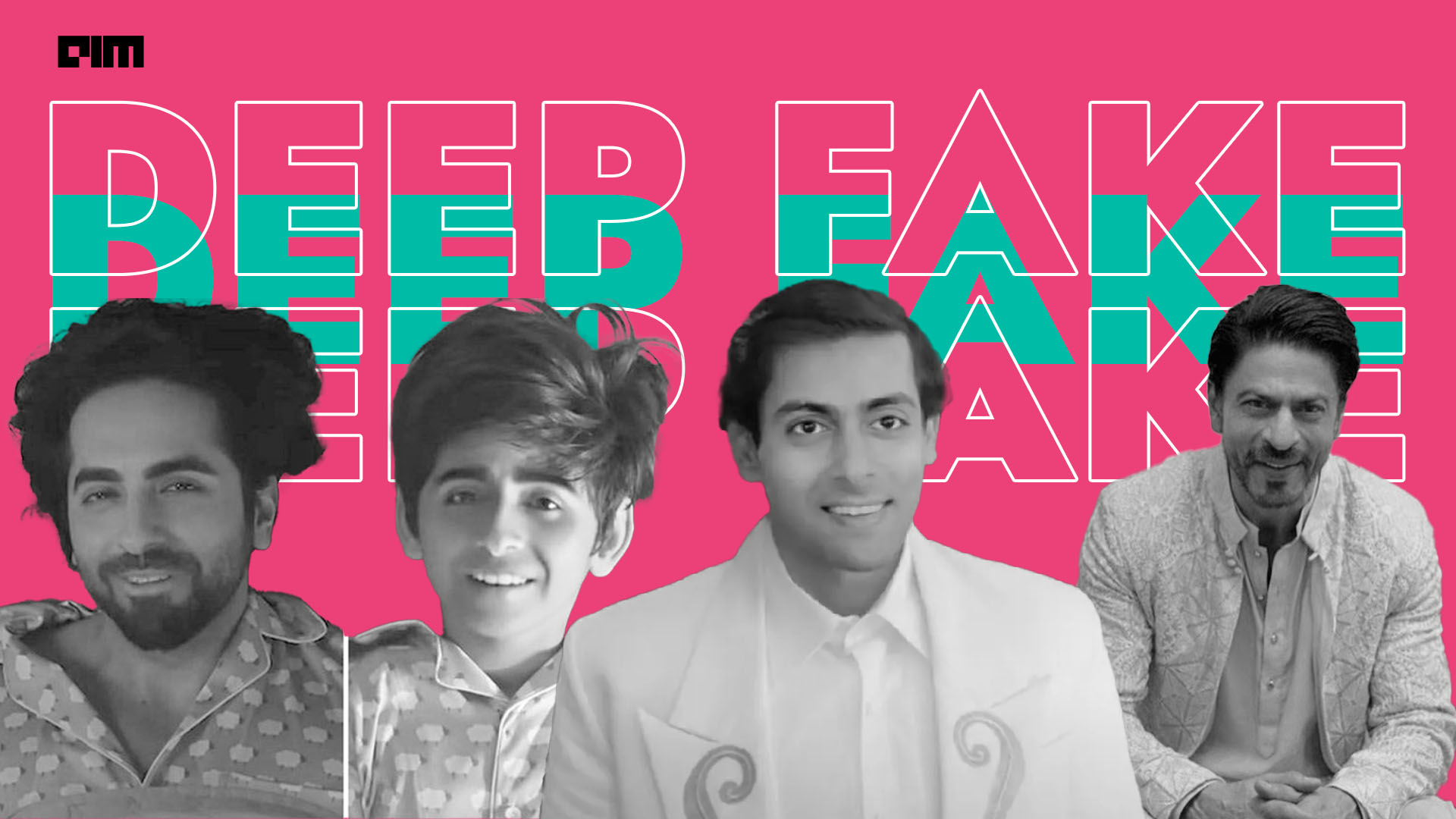
While on one end you have Anil Kapoor safeguarding against the potential use of deepfakes, on the other end you have bollywood biggies such as Shah Rukh Khan, and Salman Khan who have allowed their digital identity to be used via deepfakes for advertisements of consumer products.
Last year, Cadburys ran an ad campaign for small business owners to make original, personalised advertisements, and went on to show Shah Rukh Khan, rather deepfake Shah Rukh, saying the name of the store or brand. Salman Khan had also starred in a Pepsi commercial, where the younger version of the actor was portrayed via deepfake.
Actor Ayushman Khurrana also starred in an advertisement for Wakefit where the actor was showcased as a child with the help of deepfake. Interestingly, all these point to the increased adoption of deepfakes in the advertisement industry, where Bollywood actors are slowly embracing it.
International Acceptance
When Bollywood is still trying to figure out the adoption strategy for deepfakes, internationally, the adoption has been rampant. Late actor Paul Walker’s inclusion in his last movie via deepfake might just be one instance in the mammoth pool of adoption use-cases that Hollywood has already found with this AI tech.
De-ageing has been one of the most prominent use cases where major production houses, including Disney, have tied up with VFX design studios to implement deepfake to de-age actors. From de-ageing Al Pacino and others in ‘Irishman’ to showing a young Mark Hamill as Luke Skywalker in Disney’s Star War series, deepfake has found a comfortable place in Hollywood production.
Sports celebrities are not far behind. Footballer Lionel Messi, has signed deals with big brands allowing them to use his image and likeness in any way they deem necessary. A younger version of Messi was shown using deepfake in an ad for Mastercard.
DeepFake Will Only Get Better
When Rashmika Mandanna’s face was morphed into an Instagram influencer’s body and circulated over the net, a user pointed out the technicality of the video saying that you can find the exact point when the original face changes to become the victim’s face. In the process, hinting at how you can in fact identify a deepfake video at the moment, but it is only going to get more challenging.
While the Hollywood usage of celebrities was with their consent, there are also instances of massive viral clips without proper permission. Clips featuring ‘deepfake Tom Cruise’ were doing the rounds a few years ago. They were created by VFX specialist Chris Ume, who specialises in deepfake celebrity videos, with the help of Tom Cruise impersonator Miles Fisher.

Tom Cruise impersonator, Miles Fisher on the left. Deepfake Tom Cruise on the right. Source: Verge
Creator Ume spoke about the myriad production uses that deepfake has, and also emphasised on how this technology is getting more realistic and easier to make. However, the technology cannot operate by itself. To make a near-perfect one, like the one shown in the image above, Ume took over two months to train the AI base models using a pair of NVIDIA RTX 8000 GPUs on Cruise’s footage, followed by days of further processing for each clip.
Interestingly, Tom Cruise has not sued any of them for such deepfakes, and only resorted to making his account official.
While there are grave misuses of this technology, specific use cases in industries such as movies rally for this technology. While the discussion on deepfake’s usage and ethical implications are still debated in Bollywood, others are quietly embracing it and making the most of it.
The post Bollywood Has A Deepfake Problem appeared first on Analytics India Magazine.